Maqoor NGO and HayMed NGO jointly surveyed 250 people working in greenhouses in Armenia’s Ararat region: 101 owners and 149 workers. Together, we asked how they use pesticides and how that affects their health. Then we brought farmers together for a training conference built around what we learned.
Greenhouse farming feeds families and supports livelihoods across the Ararat Valley. It also exposes people to chemicals every working day, often with little formal guidance. We wanted to understand that reality directly from the people living it, and then do something about it.
About the survey
Maqoor NGO and HayMed NGO designed and carried out the study together, as equal partners. Teams of local young people, trained by both organizations before fieldwork, visited greenhouses across the Ararat region and conducted face-to-face interviews.
We used two questionnaires:
- Greenhouse owners (101 people): greenhouse size and crops, pest control methods, how pesticides are chosen and bought, storage, dosage, container disposal, protective equipment provided to workers, and symptoms seen among staff.
- Greenhouse workers (149 people): age and background, use of personal protective equipment (PPE), spraying and equipment practices, exposure history, health symptoms, whether they saw a doctor, and interest in further training.
Owners were grouped by greenhouse size: 56 small, 29 medium and 16 large. This let us compare how practices and risks change with the scale of the farm.
What we found
Experience guides decisions, not training. 85% of owners have no formal agricultural training, and 78% have never had pesticide-specific training. Most choose products based on their own experience (79%) or a seller’s advice (51%). Fewer than 3 in 10 consult an agronomist or other expert.
Chemicals dominate, and approval status is unclear. Chemical pest control is the main method in every greenhouse size. Nearly all pesticides are bought from resellers. Yet 68% of owners do not know whether the products they use are officially approved.
Empty containers end up in household waste. Throwing containers in the household rubbish is the most common practice; burning is second. Only 2 of 101 owners reported disposing of containers properly.
Small greenhouses carry the most risk. The gap between small and large farms was the clearest pattern in the survey:
| Indicator | Small | Medium | Large |
| Owners who apply pesticides themselves | 95% | 76% | 63% |
| PPE available for workers | 79% | 93% | 93% |
| Coveralls available | 2% | 24% | 44% |
| Safe pesticide storage available | 29% | 48% | 69% |
| Worker symptoms reported after spraying | 36% | 24% | 0% |
The most frequent symptoms were allergies, breathing problems, nausea, dizziness and fatigue. Training made a measurable difference in one area: owners with agricultural training were twice as likely to have proper pesticide storage (73% vs 35%).
Workers see the danger, but protection is incomplete. About half of workers describe pesticides as “poison”, but 44% call them “medicine” for plants. Gloves and masks are common; coveralls (13%) and goggles (11%) are rare, leaving skin and eyes exposed. Workers who had a clear pesticide incident were five times more likely to see a doctor than others (26% vs 5%). Many with milder symptoms never sought care.
There is demand for learning. 58% of workers asked for training on correct dosage and 59% on prevention. Interest was highest among workers under 50.
From findings to action: our training conference
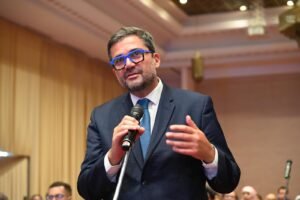
A survey only matters if it leads to change. Building on these results, Maqoor NGO and HayMed NGO jointly organized a conference and hands-on training for greenhouse owners and workers in August 2026. Each session answered a gap the survey revealed.
1. Pesticides in greenhouses: risks and preventive measures. Led by Dr. Lilian Ceballos, this session explained the main pesticide families and how they affect the body. It covered the signs of acute poisoning and the long-term effects of chronic exposure. Participants learned how pesticides enter through the skin, eyes, lungs and mouth, and which protective equipment blocks each route. The session closed with safe storage in locked, labelled spaces, correct container disposal, and first aid. A printed guide in Armenian and English was shared with participants.
2. Strategies in agricultural phytotherapy. Based on the work of French specialist Eric Petiot, this session presented plant-based alternatives that strengthen crops and reduce reliance on chemicals. Participants learned how to prepare fermented extracts of comfrey, nettle and alfalfa, and decoctions of horsetail, garlic and other plants. Each recipe came with dilution rates for greenhouse and field use.
3. Making compost. A practical session showed how to build a layered compost pile from straw, hay, chipped branch wood, green plants and manure. Fermented plant extracts and basalt rock dust enrich the mix. Mature compost, ready after 6 to 9 months, rebuilds soil fertility naturally and reduces the need for synthetic inputs.
Together, these sessions addressed both sides of the problem: using pesticides more safely today, and needing fewer of them tomorrow.
What comes next
The survey points to clear priorities for the future work of Maqoor NGO and HayMed NGO:
- Support small greenhouses with access to protective equipment, safe storage and proper container disposal.
- Make training practical, with supervised spraying, follow-up visits and on-farm demonstrations, so knowledge becomes daily habit.
- Raise awareness of approved pesticide products and safe disposal through community outreach.
- Keep researching, with improved questionnaires that track how often people are exposed and how their health changes over time.
This project was a true partnership: Maqoor NGO and HayMed NGO shared the work equally, from survey design to the training conference. We are also grateful to the Municipality of Artashat for its close collaboration and for helping us reach greenhouse owners in the community; without its support, this survey would not have been possible. We thank the young volunteers who carried out the interviews, and our trainers. Above all, we thank the greenhouse owners and workers of the Ararat region who gave us their time and trust.
Want to support this work or bring the training to your community? Contact Maqoor NGO or HayMed NGO.