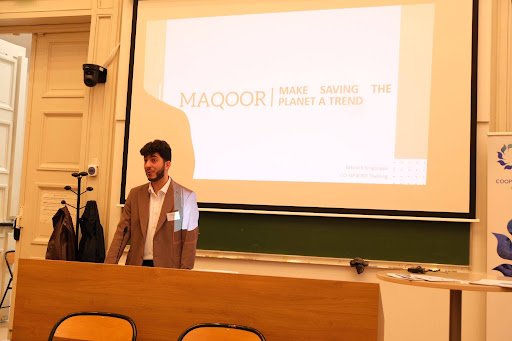
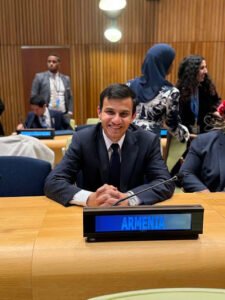
From April 21-24, Maqoor’s National Coordinator, Mkrtich Grigoryan, was in Paris participating in an international gathering focused on strengthening the role of civil society in biodiversity policy ahead of CBD COP17. The event, organized within the CO-OP4CBD Horizon Europe project, brought together organizations from across regions working on environmental advocacy and capacity-building.
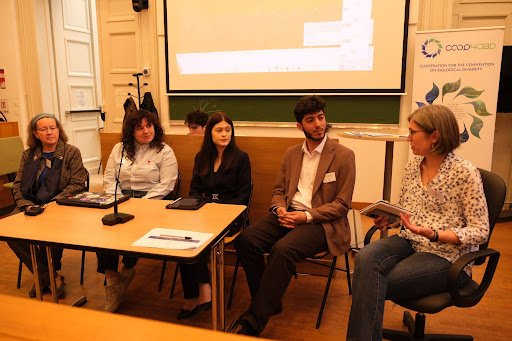
For Mkrtich, the experience was not just about attending discussions, but about contributing to them. As a speaker on the panel “Experiences from Women and Youth Organizations in Engaging in CBD Processes,” he shared insights from Maqoor’s work in Armenia, where youth-led initiatives are increasingly shaping how environmental issues are understood and addressed at the local level.
One of the key messages he brought into the conversation was simple but important: youth participation in global environmental processes cannot remain symbolic. It needs to be practical, consistent, and supported by real opportunities to engage. Drawing from Maqoor’s experience, he spoke about the gap that often exists between international frameworks and local realities, and the importance of making these spaces more accessible to young people.
Throughout the event, discussions focused on how civil society can better prepare for and engage in CBD COP17, from understanding technical processes to building stronger networks and partnerships. For organizations like Maqoor, these spaces are valuable not only for learning, but for making sure that perspectives from countries like Armenia are part of wider global conversations.
Beyond the panel, the event also created space for informal exchanges, conversations with other youth leaders, organizations, and experts working on biodiversity across different contexts. These moments often proved just as important, opening opportunities for collaboration and shared learning.
Mkrtich’s participation reflects something broader for Maqoor: a growing effort to connect local work with international processes. As environmental challenges become more interconnected, so does the need for collaboration across borders, and for youth voices to be part of that conversation in a meaningful way.
As we move closer to CBD COP17, experiences like this continue to shape how we think about our work, grounded locally, but increasingly connected to global efforts.